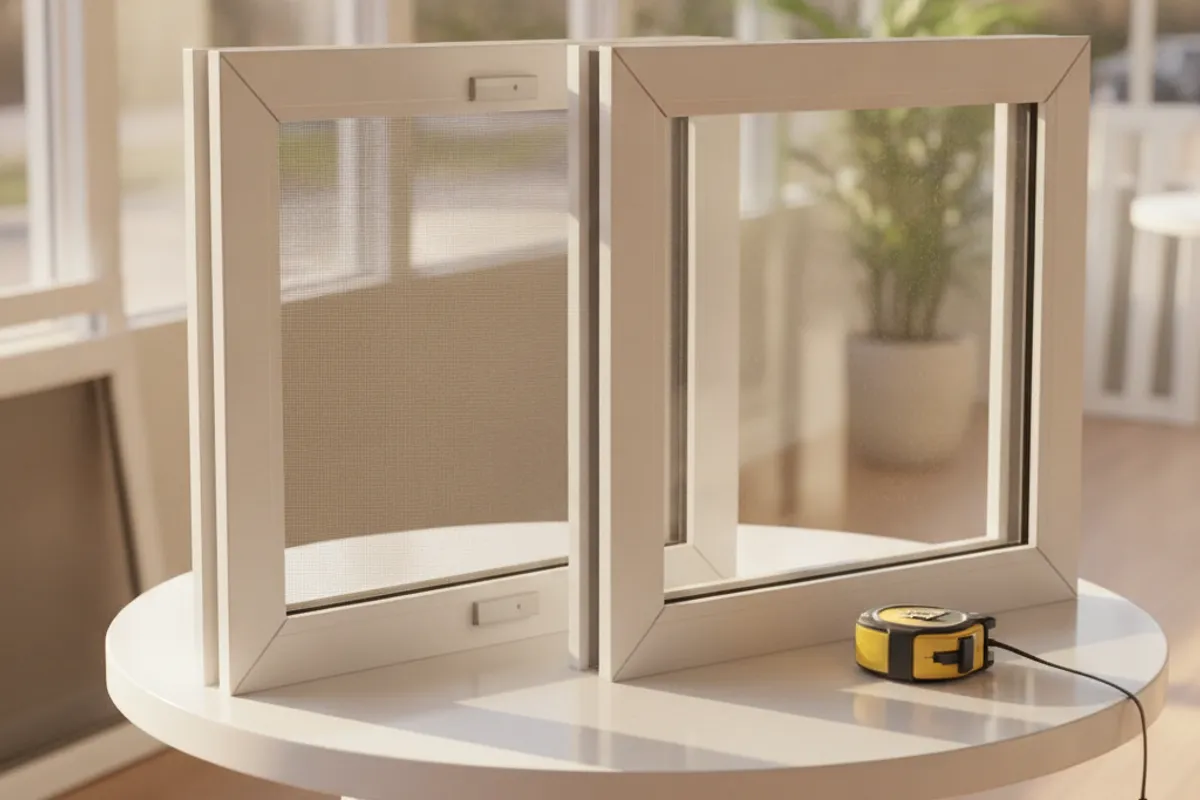
The basic trade-off
Screen rooms and glass rooms both extend usable living space outdoors. The trade-off is simple: screen rooms let air move freely and cost less; glass rooms give you weather protection and temperature control and cost more. In most of the country that trade-off is easy to decide: you want a screen room in Florida and a glass room in Minnesota. In San Diego, the answer is less obvious because the climate sits somewhere in between, and location within the county matters a lot.
What a screen room is
A screen room is an enclosed outdoor space using aluminum frames with fiberglass or aluminum screen mesh. You get shade, bug protection, and some wind shelter without any glass. The room breathes. On a 72F day in Encinitas with an ocean breeze, a screen room is an ideal outdoor space: open air, no bugs, no direct sun.
Screen rooms are the least expensive enclosure type, typically running $5,000-$15,000 for a standard 200-250 square foot room built on an existing covered patio. They require permits but the permit process is simpler than for a glass enclosure or full addition.
The limitation is temperature. A screen room in Mission Valley in August at 3 PM is still a 95F room. You are not getting thermal protection from screen mesh. The same room in January, when the temperature drops to 48F overnight, provides almost no warmth. Screen rooms in San Diego are comfortable from roughly late February through early November, which for most of the county is most of the year.
What a glass room is
A glass room adds glass panels, typically single-pane or dual-pane tempered glass, in place of or in addition to screen panels. The glass blocks wind and rain, retains some heat, and depending on the glass spec, can significantly reduce solar heat gain. Glass rooms run $15,000-$50,000+ depending on size, glass quality, and whether a foundation or structural work is needed.
Glass rooms offer meaningful protection against temperature extremes. A well-glazed room facing north or east in a coastal neighborhood like Pacific Beach or La Mesa can stay comfortable year-round with no mechanical heating or cooling. A room facing west or south in Santee or El Cajon will still heat up significantly in summer if the glass is not specified with a low SHGC coating.
The permit process for a glass room is more involved than for a screen room. Depending on how the structure is classified, you may need structural plans and energy compliance calculations. See the sunroom permitting guide for San Diego for what each type typically requires.
The hybrid option: screen-track or convertible panels
Many homeowners in San Diego want both options: open-air in spring and fall, closed in winter and during coastal storm events. Several patio enclosure manufacturers make panel systems that convert between screen and glass configuration, either by swapping panels seasonally or by using a track system where glass panels slide behind screen panels.
These hybrid systems cost more than a screen-only room but less than a full glass enclosure. They are particularly popular in the North County coastal areas around Carlsbad and Oceanside, where the weather is mild enough to want open air most of the year but wet enough in winter to want the option to close things in.
Which makes sense by location in San Diego County
Coastal neighborhoods (La Jolla, Del Mar, Encinitas, Carlsbad, Ocean Beach, Coronado): Screen rooms are very livable year-round except during winter rains. A convertible panel system or glass room adds value for winter use and during the occasional Santa Ana wind event. The ocean breeze often makes air circulation preferable to enclosure.
Central San Diego (Mission Valley, North Park, Hillcrest, Kearny Mesa): Glass rooms with appropriate SHGC glass are worth the cost. Summer afternoons can be hot and winter nights can be cool enough that glass enclosure meaningfully extends the comfort zone.
North County Inland (Rancho Bernardo, Escondido, San Marcos, Vista): Glass rooms are the better investment. The temperature range is wider than coastal: summer highs in the low-to-mid 90s, winter lows in the mid-30s. A glass room in these areas gives you genuinely year-round usability that a screen room cannot match.
East County (El Cajon, Santee, Lakeside, Alpine): Glass rooms are clearly the better choice, and the glass spec matters significantly. West-facing rooms in these locations should use low-SHGC dual-pane low-E glass and ideally include a mini-split. A screen room in East County in July is barely usable in the afternoon.
South County (Chula Vista, National City, San Ysidro): Screen rooms work well here given the mild climate influenced by proximity to the bay. Glass rooms add year-round utility and are worth the investment for homeowners who want the room to function as living space.
Browse the dedicated pages for screen rooms and glass sunrooms to compare scope and pricing for each option.
To get matched with contractors who build both screen rooms and glass enclosures across San Diego County, call (858) 925-5546. Sun Room SD connects homeowners with insured local crews for projects at every price point. Verify any contractor at cslb.ca.gov before signing a contract.
Can I add glass panels to an existing screen room
Yes, in many cases. The feasibility depends on whether the existing frame can support the added weight of glass panels and whether the structure and foundation meet permit requirements. Get a structural assessment before assuming an existing screen room can be upgraded rather than replaced.
Does a screen room require a building permit in San Diego
Yes. Screen rooms attached to the house and covering an existing patio require a permit in most San Diego jurisdictions. Some very basic freestanding shade structures below specific size thresholds may qualify for an exemption, but any enclosed structure attached to the home does not.