Two different things that get called the same thing
In contractor conversations and home improvement marketing, “patio enclosure” and “sunroom” often get used interchangeably. They describe different products with different structural requirements, different permit classifications, and different price points. Understanding the distinction helps you ask the right questions and compare quotes that are actually for the same thing.
What a patio enclosure is
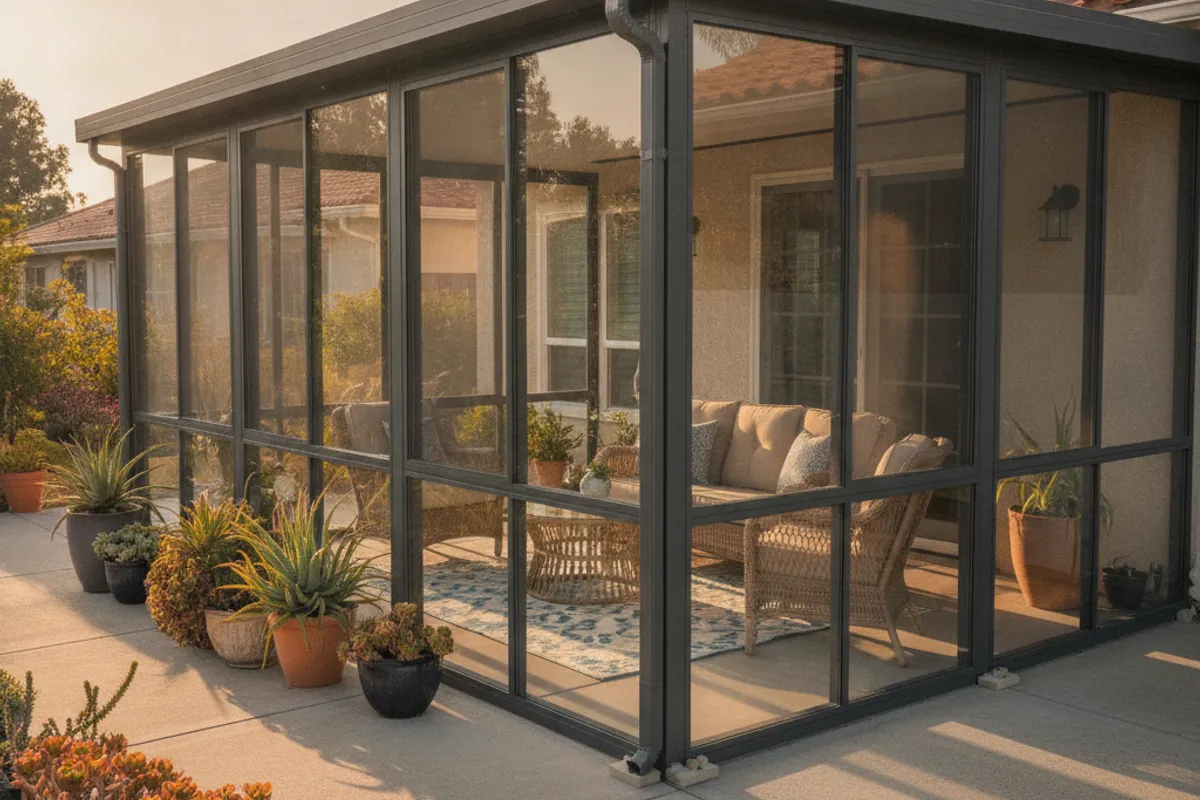
A patio enclosure converts an existing covered patio into an enclosed space. The defining characteristic is that it uses the existing patio structure: the roof is already there, whether it is a wood lattice, an aluminum patio cover, or a solid-roof addition. The enclosure adds screen or glass panels between the existing posts or columns to close in the sides.
Common patio enclosure types in San Diego:
Screen rooms: Screen panels in aluminum frames installed between existing patio posts. These provide bug protection and some wind shelter but no temperature control. They are the least expensive option and appropriate for mild coastal neighborhoods where outdoor living is comfortable most of the year.
Glass panel enclosures: Single-pane tempered glass in aluminum frames, sliding or fixed. More weatherproof than screens. Still connects to the existing patio roof, which is typically not insulated and may not have adequate structure for heavy glass loads without reinforcement.
Acrylic or polycarbonate panel enclosures: A middle ground between screen and glass. Lower cost than glass, lighter weight, but scratches over time and does not have the clarity or longevity of tempered glass.
A patio enclosure is generally classified differently than a room addition by San Diego building departments. Many enclosures still require a permit, but the permit process is simpler than for a full addition.
What a sunroom is
A sunroom is a purpose-built glass-walled room, typically attached to the house, that may or may not use an existing patio structure as its starting point. The defining characteristics are:
- Purpose-built aluminum or engineered framing system (or wood framing in a custom build)
- Glass walls, usually dual-pane low-E glass in better builds
- A proper roof system, either glass panels, insulated metal panels, or a full stick-framed roof
- Electrical, and often mechanical (mini-split) connections
- Its own foundation if built on bare ground, or reinforced slab if repurposing existing concrete
A sunroom is typically classified as a room addition by San Diego building departments, which means full permitting including structural plans, energy compliance calculations (Title 24), and multiple inspections. It is more like adding a room to the house than enclosing an existing patio.
How cost compares
The cost difference is significant:
- Basic screen room patio enclosure on existing covered patio: $5,000-$15,000
- Glass panel patio enclosure on existing covered patio: $10,000-$25,000
- Prefab aluminum sunroom with new foundation: $18,000-$40,000
- Custom wood-framed sunroom addition: $40,000-$90,000+
The large difference comes from foundation work, the quality of the glass and framing system, and the structural engineering required for a purpose-built addition.
Which one fits your situation
A patio enclosure is the right call when:
- You have an existing solid-roof patio cover in good condition
- Your budget is under $25,000
- You want year-round mild use rather than true climate-controlled living space
- Your HOA or jurisdiction imposes setback restrictions that limit a larger addition
A sunroom is the right call when:
- You do not have an existing covered patio, or the existing structure is not adequate
- You want the space to function as actual living space, potentially with HVAC
- You are willing to go through the full permit and plan review process for a quality addition
- You want the addition to be appraised as improved square footage on the home
The permit and property tax question
This is where the distinction between the two matters most. A sunroom classified as an addition adds assessed value to the home and increases property taxes proportionally. A basic patio enclosure may or may not trigger a reassessment, depending on how the county assessor classifies it.
Some San Diego homeowners choose a patio enclosure specifically to avoid triggering a property tax reassessment. This is a legitimate factor to discuss with your contractor and, if it matters financially, with a tax advisor.
For more on permits specifically, see the sunroom permitting guide for San Diego.
See the dedicated pages for patio enclosures and sunroom additions for full scope, pricing, and regional notes on each option.
Sun Room SD connects homeowners with insured local contractors who build both patio enclosures and full sunroom additions across San Diego County. Call (858) 925-5546 to get matched with the right crew for your project. Verify any contractor at cslb.ca.gov before signing a contract.
Can I convert a patio enclosure to a full sunroom later
Sometimes, but it usually requires significant rework. If the existing patio roof structure was not built to support glass panels, it may need reinforcement or replacement. If the foundation is a thin decorative slab, it may need to be replaced or supplemented. Get a conversion cost estimate at the same time as the original enclosure quote so you can evaluate the total path.
Which type adds more value to a San Diego home
A permitted sunroom addition classified as improved living space adds more appraised value than a basic patio enclosure. The enclosure still adds livability and appeal, but it may not increase the appraised value proportionally to its cost.