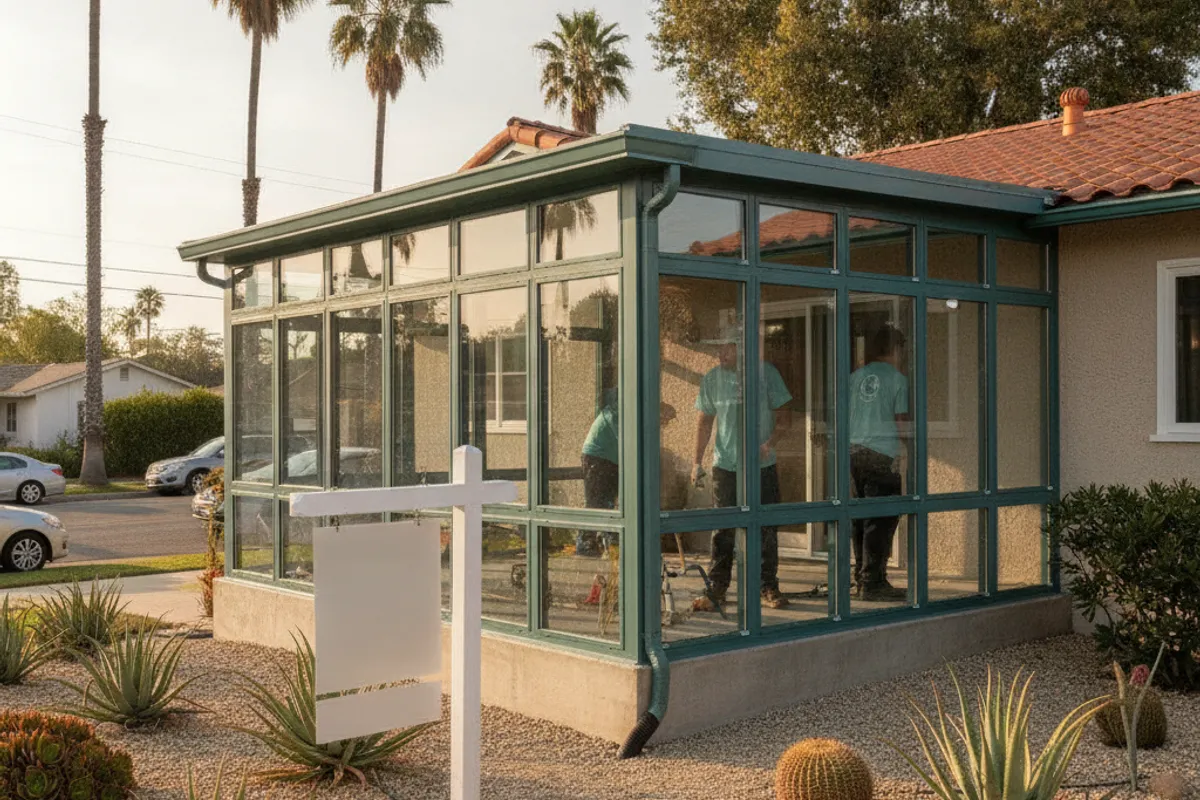
The honest answer: yes, but less than it costs
A sunroom addition in San Diego adds home value. The appraised value added is almost always less than the cost to build it. According to remodeling industry data and appraiser practice, sunroom additions typically return 40-70% of their cost in appraised value at resale. That does not mean sunrooms are bad investments. It means the primary return is in quality of life and livability, with a secondary return in sale price.
That said, San Diego’s market dynamics are favorable compared to most metros. The demand for indoor-outdoor living is not a trend here; it is the expected standard in a market where buyers have been paying premium prices for decades in part because of the climate. A well-built, properly permitted sunroom addition in a neighborhood where that square footage is in demand can do better than the national average.
What appraisers actually count
San Diego appraisers use several criteria to determine how much value a sunroom adds:
Permitted and classified as living space. If the room is permitted and the building department classifies it as conditioned living area (meaning it has climate control), it can be counted in the home’s gross living area (GLA) square footage. Additional permitted square footage is appraised using comparable sales that have similar square footage. This is the highest-value outcome for a sunroom.
Permitted but not classified as living area. A permitted sunroom that is not fully conditioned may be counted by appraisers as a “finished room” or “enclosed porch” rather than GLA. This still adds value but at a lower per-square-foot rate than GLA.
Unpermitted. An unpermitted enclosure adds no appraised value and may create a disclosure and negotiation problem at sale. The buyer’s agent will flag it. The seller either prices it in or retrofits the permit, which may require opening finished work for inspection.
Quality and integration. An appraiser compares the sunroom to comparable sales. A glass addition that looks like part of the home and was built to the same standard as the rest of the house appraises better than a prefab aluminum enclosure that looks tacked on. In neighborhoods like La Jolla, Del Mar, and Rancho Santa Fe, where comparable sales include high-quality additions, quality matters more.
What the San Diego market responds to
Beyond appraised value, there is market value, which is what buyers will actually pay. In San Diego’s competitive market, finished outdoor living spaces are a genuine selling point in several ways:
Functional square footage. In neighborhoods where price per square foot is the dominant metric, adding permitted square footage matters. A 250-square-foot four-season addition that is appraised as living space adds more to the sale price than a screen enclosure that is not counted in GLA.
Indoor-outdoor appeal. San Diego buyers expect thoughtful indoor-outdoor flow. A well-designed glass room that connects the kitchen or living area to the backyard is a visual and functional asset, even if the appraiser counts it conservatively.
Year-round usability. In North County Inland and East County neighborhoods like Rancho Bernardo, Poway, Santee, and El Cajon, a properly glazed and conditioned sunroom that extends usable space into a hot summer means buyers in those markets may pay more than the appraised addition. A home with a comfortable outdoor room sells faster.
How to maximize return
The choices that most reliably improve resale outcome in San Diego:
Pull the permit. No exceptions. Unpermitted additions are a resale problem. See the permitting guide for San Diego sunrooms.
Use quality glass. Dual-pane low-E glass with a low SHGC reads to buyers as a quality addition. Single-pane glass in a south- or west-facing room will be immediately apparent to any buyer who visits on a sunny afternoon. See the glass selection guide for San Diego.
Match the house. A custom addition that connects to the house’s roofline and matches the trim and siding adds more value than a prefab enclosure that reads as an afterthought. If you are building at the quality level of your neighborhood, match the neighborhood standard.
Condition the space. A room with a mini-split that can be used comfortably in August and in January is classified differently by appraisers and marketed differently to buyers than a room that is only usable in spring and fall. For inland neighborhoods especially, the HVAC matters.
A permitted sunroom addition adds the most appraised value of any option. A well-built four-season sunroom with dedicated HVAC is the version buyers and appraisers respond to most favorably.
To get connected with local contractors who build permitted sunroom additions across San Diego County, call (858) 925-5546. Sun Room SD connects homeowners with insured local crews for every type of sunroom project. Verify any contractor at cslb.ca.gov before signing.
How much square footage does a sunroom add to a San Diego home
That depends on how the room is classified. A fully conditioned, permitted addition is typically counted as GLA and adds to the square footage listed in the public record. An unconditioned three-season room or patio enclosure may not be counted as GLA. Ask the contractor how the room will be classified on the permit before making assumptions about square footage increases.
Does a sunroom increase property taxes in San Diego
Yes, if it is permitted and classified as improved living space. The San Diego County Assessor’s Office reassesses the property after a permitted addition, adding the value of the improvement to the assessed value. The amount depends on the size and quality of the addition.